Introduction
When you talk about Asturias and motorcycling, one thing immediately comes to mind: the Picos de Europa… Without a doubt, a ride to do at least once in a lifetime - and preferably several times.
That little corner in the north of Spain, between Galicia and Cantabria, known as Asturias, is truly a unique natural paradise. But it is much more than the Picos de Europa National Park… It’s true that the Picos hold the most dramatic landscapes - they are also the third‑highest mountain range in Spain, after the Sierra Nevada and the Pyrenees. But Asturias also has a coastline and, inland, an incredibly varied landscape of mountains, gorges, waterways, villages, and meadows… And thanks to its rugged terrain, it is also a paradise for cyclists.
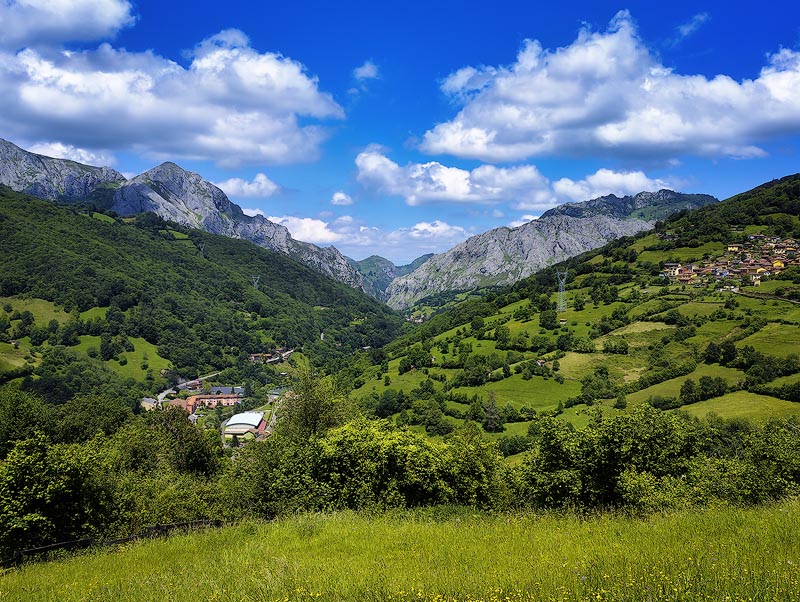
It is precisely on the "other side" of the Picos de Europa that we designed a route that crosses more than twenty mountain passes (puertos) ranging from 2,625ft800m to 6,234ft1,900m in altitude… A true roller coaster that begins with the highest puertos, crosses Somiedo, skirts Galicia, passes through typical villages, northern meadows, and mountain terrain. It’s not an easy route, but nothing overly complicated either, though there are a few demanding sections - such as the climb to Angliru, which must be tackled with caution (23% gradient)… What is guaranteed is a diversity of landscapes, sensations, and a genuine postcard of what the region of Asturias is all about.
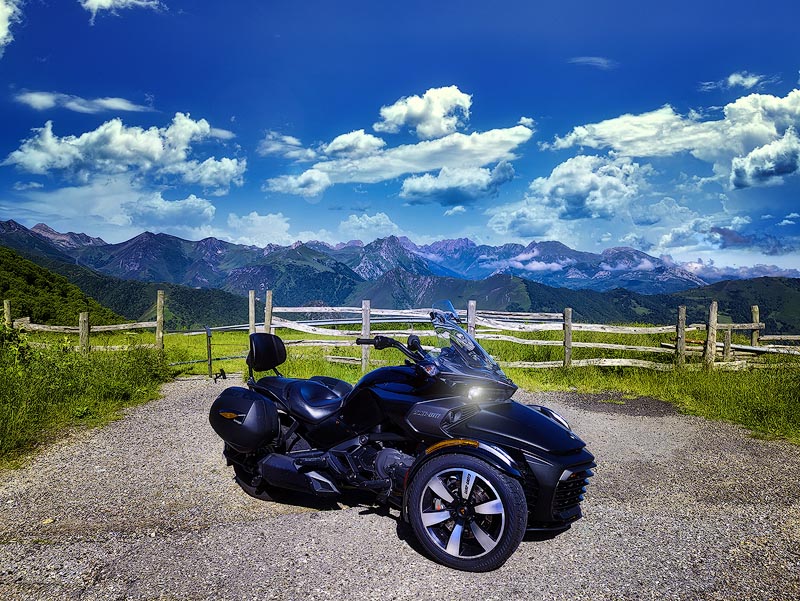
It is this variety of elevations and beautiful scenery that attracts mountain cyclists and, in particular, the legendary La Vuelta a España, which has frequently passed through many of the passes on our list.
Asturias holds a special place in the history of La Vuelta, serving as the stage for some of its most iconic and decisive stages. Its steep, short, and extremely demanding roads, combined with unpredictable weather and striking green landscapes, have created legendary settings such as the climbs to Angliru, Gamoniteiro, and Pajares (all part of our route). These ascents have become symbols of the race’s toughness and attract huge crowds, cementing Asturias as one of the great epic arenas of La Vuelta.
The mountain passes we propose to conquer, in order, are:
- Puerto de Pajares, 4,521ft1,378m
- Pico la Pena, 5,135ft1,565m
- Alto de Angliru, 5.151ft1.570m
- Alto del Cordal, 2,615ft797m
- Alto de la Cobertoria, 3,848ft1,173m
- Alto de Gamomiteiro, 5,810ft1,771m
- Puerto de San Lorenzo, 4,419ft1,347m
- Puerto de Somiedo, 4,875ft1,486m
- Puerto de Cerredo, 4,459ft1,359m
- Alto del Campillo, 3,537ft1,078m
- Campo de Tormaleo, 3,402ft1,037m
- Puerto del Connio, 4,314ft1,315m
- Puerto de las Muyeres Muertas, 3,602ft1,098m
- Alto de Valvaler, 3,661ft1,116m
- Alto de las Pedras Apañadas, 3,720ft1,134m
- Puerto del Acebo, 3,379ft1,030m
- Puerto del Palo, 3,760ft1,146m
- Alto de la Marta, 3,625ft1,105m
- Alto de Bustiango, 3,314ft1,010m
- Alto de Brañúas, 2,477ft755m
- Alto de Bustellan, 3,346ft1,020m
- Alto Casa del Puerto, 3,363ft1,025m
- Alto de las Estacas, 2,434ft742m
- Puerto de Ventana, 5,207ft1,587m
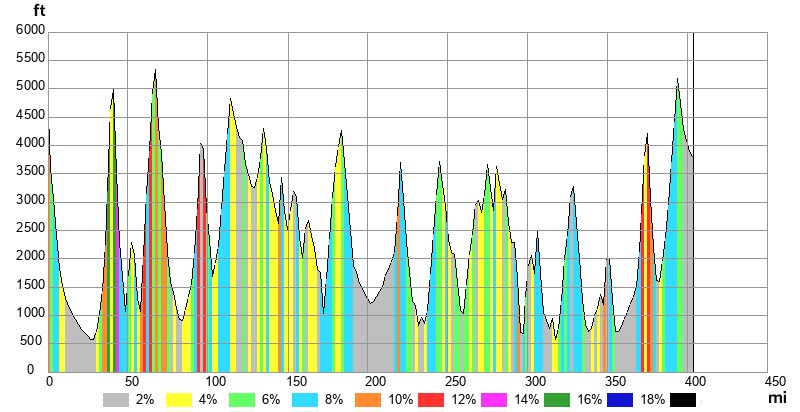
This is a route that must be done in favourable weather conditions, which rules out the harsher winter months (it snows here a lot), and even in autumn some caution is needed, as the weather changes quickly… Ideally, as always, choose late spring or early/late summer.
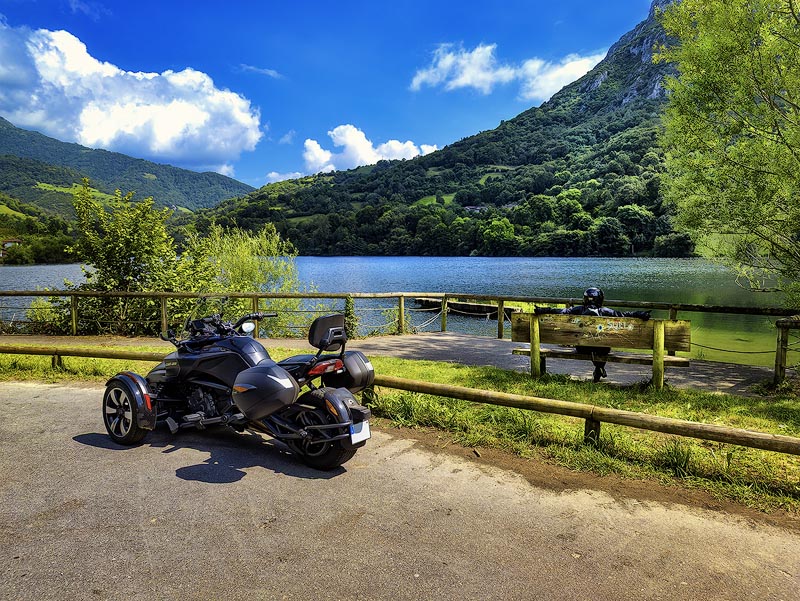
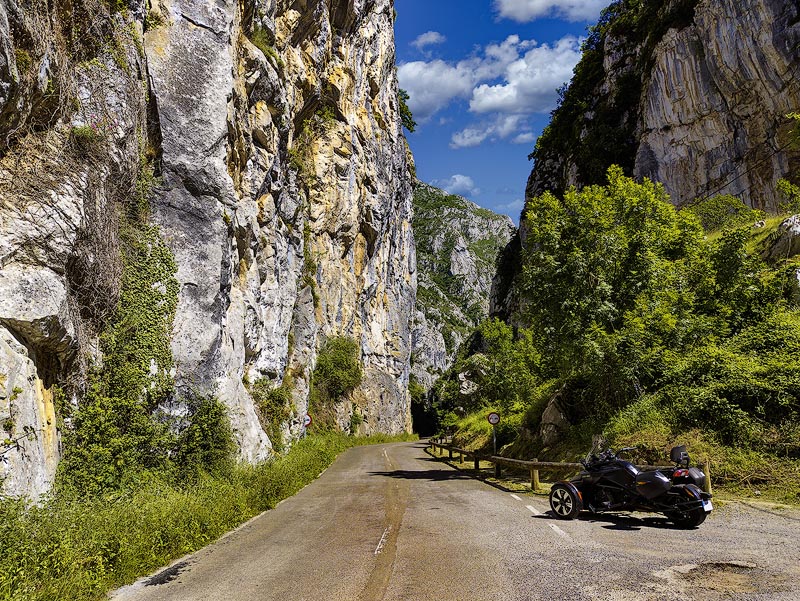
Along the way there are gorges, viewpoints, villages, and towns where you can make the necessary stops… Much of the route is along isolated, completely deserted roads. Most of the way is in good asphalt condition, though you may find some sections worn down by winter - still generally fully passable.
The route is roughly circular (around 404mi650km in total), starting northeast of the city of León, which can serve as the starting point of the trip. It begins strongly with the most difficult passes (although the route can be done in either direction). It progresses from east to west and returns near the Babia y Luna Natural Park. At the westernmost point, it makes a small incursion into the region of Galicia before returning to Asturias from the north. It is a route that can be completed in three days (not counting connections), although ideally you should add one or two extra days and a few stops along the way
Leave a message