Four years with the Thing
September 2022
Fourth year with the Thing, with the first six months still lived under pandemic conditions. It started with about 18,641mi30,000km on the odometer and ended with another 4,971mi8,000km. Given the circumstances, this wasn’t far off the normal average of 7,767mi12,500km per year. This distance was spread across several one‑day rides, a weekend along the pleasant N16 road, and two longer trips through Andalusia.
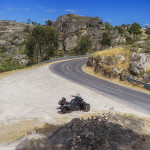
First came a trip to the Sierra de Aracena and Riotinto. A place we already knew but had never visited on three wheels. A pleasant ride, not too far from the capital.
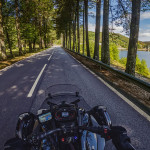
Then the ride along the N16 road, which connects Aveiro to Vilar Formoso, suited us perfectly. The connections from Lisbon are a bit tedious, but the route itself is fabulous. We did it in two days with an overnight stay in Viseu.
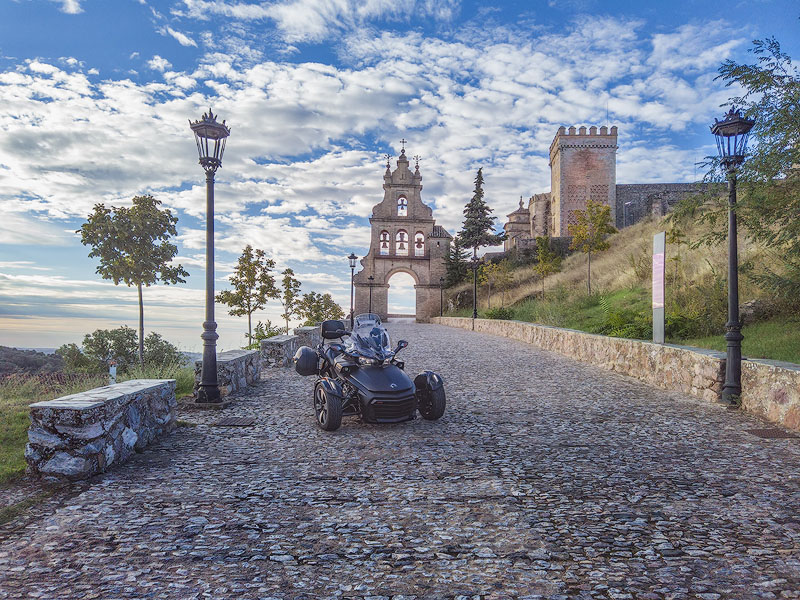
Finally, we decided to join this year’s summer meeting of the Can Am Spyder Club España in the Seville region. After two years without gatherings, the proximity of Seville convinced us to reunite with our Spanish friends. Despite the scorching heat, we particularly enjoyed this meeting — perhaps even more than the first meeting we attended in La Reinosa. We reconnected with several friends, made new ones, and, just like the first time, were wonderfully welcomed.
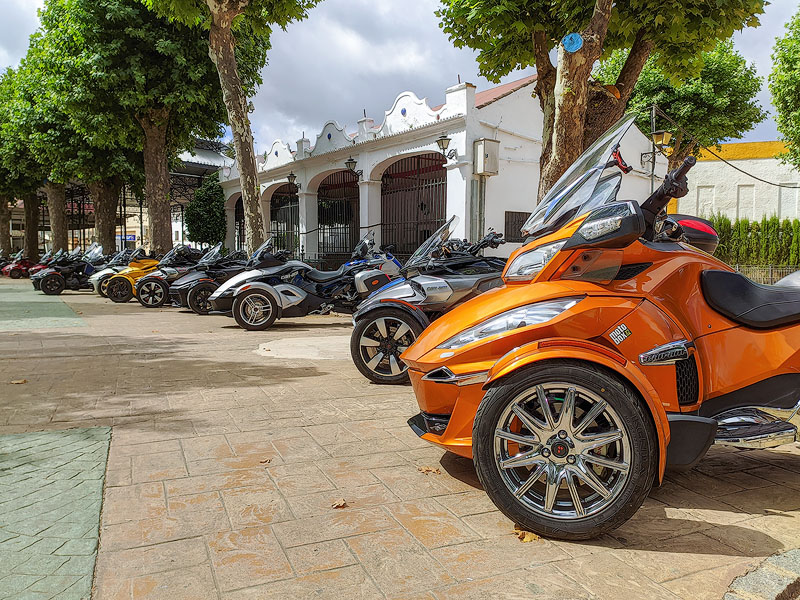
Maybe it’s because we’re the only Portuguese to show up, but there’s a clear effort to welcome us and make us feel at home. It’s truly a five‑star group, not only for their friendliness but also for their ability to organize such memorable events. Altogether, I believe there were about 50 Spyders parading through the Northern Sierra of Seville. A great ride, good food and drink, and most importantly, excellent camaraderie.
Since we were already there, we decided to extend the trip for a week into the Sierras of Grazalema and Ronda. An area we already know but always enjoy revisiting. The city of Ronda is fantastic (with an unforgettable sunset), and there’s always a corner or a pueblo to discover nearby.
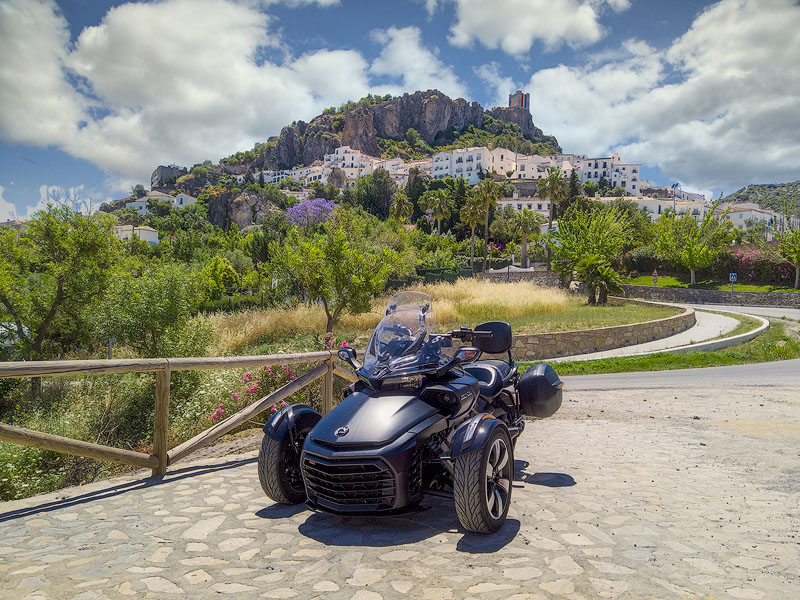
And of course, the Spyder performed flawlessly, even in the over 104ºF/40ºC heat we faced during several summer days in Spain.
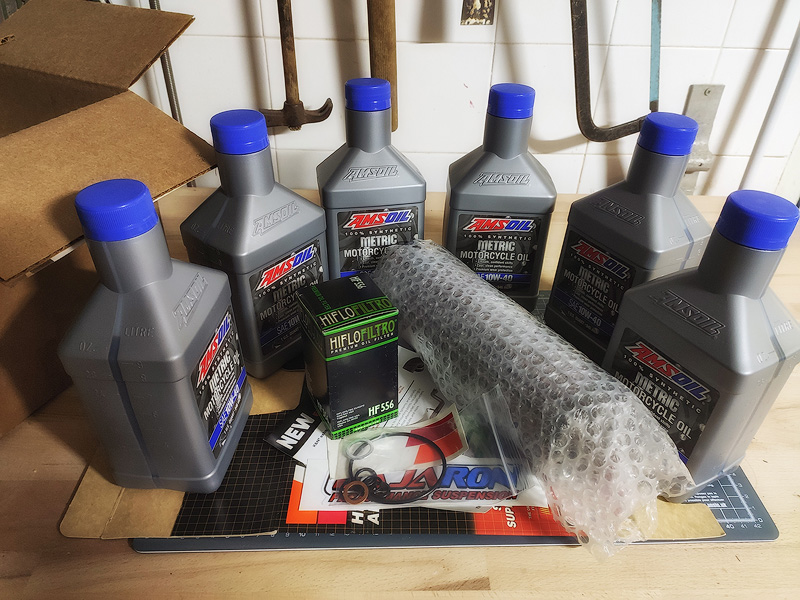
For the annual service, we repeated last year’s formula. Once again, I skipped the brand’s oil change kit (around 100€, reference #219800356) and opted for 6 bottles (6.0qt5.7l) of Amsoil Metric SAE 10W40. With oil filter and washers, the total came to under 115€ — very similar to the kit price, but with supposedly superior oil (this one fully synthetic).
At 19,884mi32,000km, two upgrades were installed, ordered from the Martin The vLogger Shop in Slovakia.
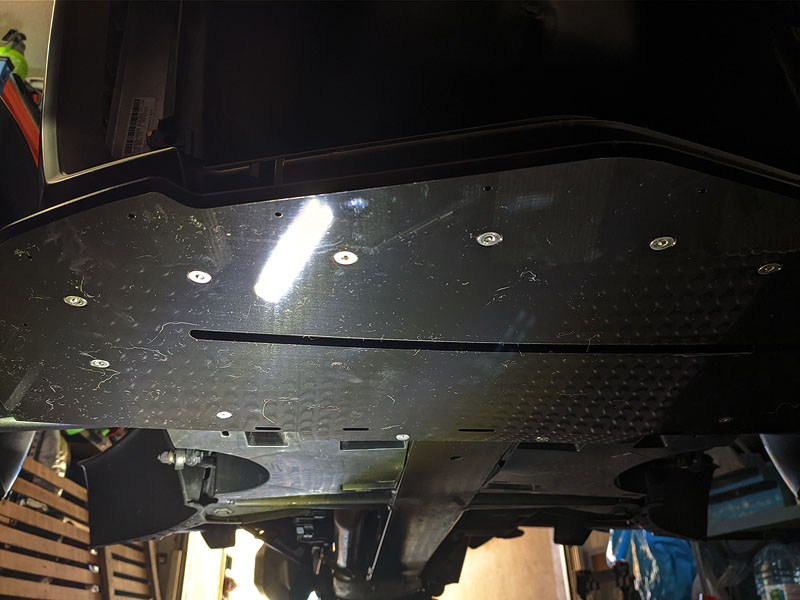
The first was something I had been considering for some time: a front protection plate for the Spyder (or skid plate). Until recently, it was only available directly from the United States, which I didn’t consider due to shipping and customs costs. Indeed, the front is very low, and after replacing the rear shock with a stiffer, more efficient one, hard braking or uneven surfaces made the nose prone to scraping the ground. The protection is basically a HPDE (high‑density polyethylene) plate — a thermoplastic with excellent resistance to impact, traction, and torsion. It’s bolted underneath the Spyder, serving as an impact zone. It’s about 0.4in1.0cm thick and protrudes slightly, also protecting against "encounters” with curbs. Of course, ground clearance is reduced, and scrapes are more frequent. But whereas these impacts used to be a concern, now they no longer are.
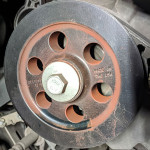
The second upgrade, following the pulley issue described here, was a belt tensioner with reinforced bearing. One suspicion is that pulley wear may be worsened by lack of belt tension. This tensioner (basically a bearing mounted on a spring‑loaded arm) applies slight pressure to the belt, reducing jolts against the pulley. I did notice some improvement in gear changes, but the vibration noise around 43mph70km/h from harmonic belt movement remains. Honestly, I have doubts about its effectiveness and may even remove it someday.
At 22,991mi37,000km it was time to replace the rear brake pads. I had planned to fit EBC pads (reference FA631HH) instead of the original Brembo OEM (reference #219800239). I had already fitted EBC pads on the front discs and was satisfied. But unfortunately, the American EBC pads were sold out everywhere, so I ended up installing Brembo 7GR88SA at a very reasonable price (37.37€), which I assume are equivalent (or better) than the original Brembo pads sold via BRP at a steep 94.47€. Note that the original Brembo OEM set lasted until 12,427mi20,000km, already at the limit with less than 0.04in1.00mm of thickness. The second set (also Brembo OEM) was replaced after 10,563mi17,000km but still above the 0.04in1.00mm minimum. So an original Brembo set should consistently last about 11,185mi18,000km. We’ll see how these new aftermarket Brembo pads perform.
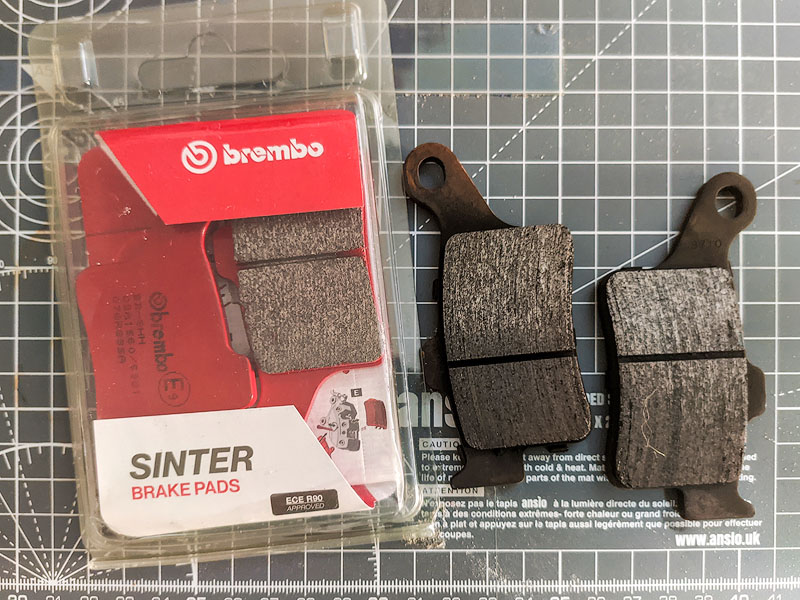
Shortly afterward, I renewed the brake fluid. The manual recommends changing it every two years, which seems a bit excessive. I noticed no reduction in effectiveness or change in color. Remember, our usage is calm and without abuse. The system has two reservoirs (front and rear), and for a full purge I used two 3.4oz100.0ml bottles of Brembo Sport Evo 500+++ (DOT4).
The front pulley was checked and showed no visible dust about 6,214mi10,000km after its replacement (see pulley problem).
Looking ahead, the next maintenance items will likely be tires (front and rear) and front brake pads. Depending on usage, we’ll see what needs replacing next year.
To close, the usual statistics: four years accumulated and about 23,612mi38,000km.
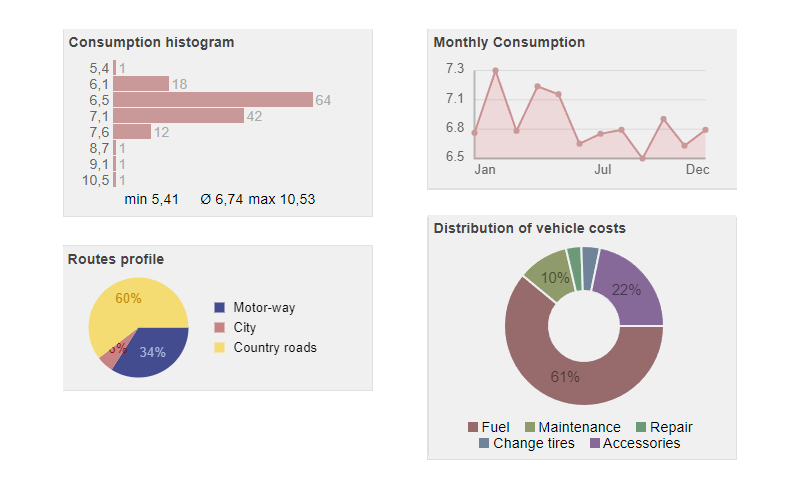
Fuel consumption remains around 34.8mpg(US)6.8l/100km with about 34% motorway. Trips almost always two‑up and sometimes with luggage.
With a financial crisis looming, we’ll see what next year brings in terms of rides, but surely we’ll find some time to roll
Update [September 2022]:
Regarding the pulley issue, we received a recall notice precisely for its replacement. BRP seems to have found a solution for this premature wear problem and is beginning recall interventions to fix it.
Leave a message